Situation
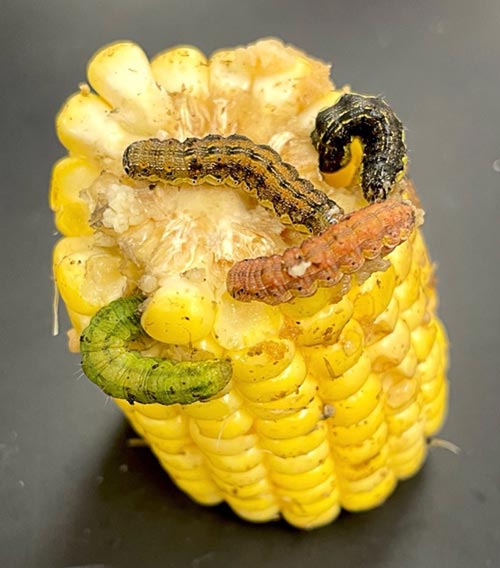
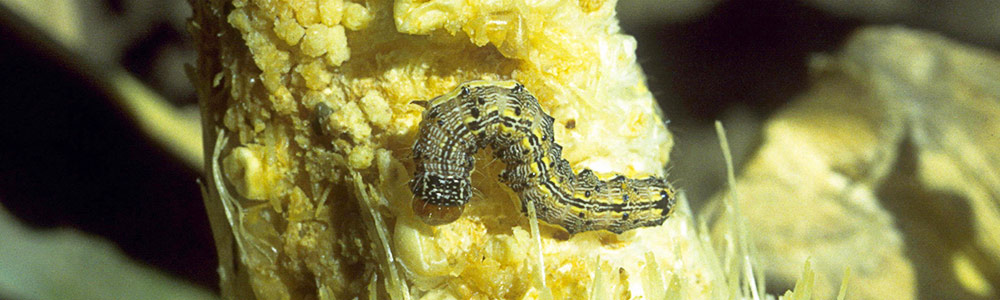
Corn earworm (CEW, Helicoverpa zea) is the most significant pest of sweet corn in the United States and producers report that management has become more difficult, more expensive, and less effective. A combination of factors may explain increases in corn earworm damage including more successful overwintering and overwintering further north, reduced susceptibility to management tactics, and uncertainty and variability in predictions of moth pressure and damage. Best management practices are needed to deal with the evolving corn earworm threat.
Response
Specifically, we are working on:
Understanding climate and resistance impacts on corn earworm pressure. We plan to determine when corn earworm moths first become active across the eastern U.S. and whether they are from locally overwintered populations and/or migrants from farther south. Improved understanding of their early season activity and winter survival will help us predict pest pressure and when corn earworm is a threat. Moth sources may vary in susceptibility to insecticides and Bt hybrids, which we will also monitor throughout the season.
Improving corn earworm trapping and monitoring. Corn earworm moth captures in pheromone traps can be highly variable which makes spray schedule decisions difficult. This variability may be due to multiple interaction factors including differences in traps and lures, frequency of lure changes, trap location, landscape features, weather conditions, and/or other factors. We will conduct experiments that determine the consistency and accuracy of traps.
Evaluating and improving trap capture based thresholds and IPM programs. IPM programs that use moth captures to determine spray intervals help avoid the expense and risks of unnecessary sprays. However, spray interval recommendations based on moth captures vary and were last carefully evaluated in the early 90s; therefore, we plan to update them using current management technologies. For example, the insecticide active ingredient chlorantraniliprole (e.g., Coragen, Vantacor) is less harmful for beneficial insects and might be helpful in spray rotations to conserve natural enemies and improve overall insect management.
Determining costs and returns for corn earworm management. IPM recommendations must be both effective and economic. Monitoring traps and lures, insecticides, and seed all vary in cost depending on the specific product used. In addition, they may vary in the amount of labor required to effectively use them. We will compare costs and returns for the monitoring and management programs evaluated, enabling growers to make economic management decisions.
Better understanding CEW management decision-making. To better serve growers and improve delivery of up-to-date information that aligns with their production systems, we will conduct interviews and surveys that determine how they use Extension information and make management decisions. We will also solicit feedback to make sure we deliver useful resources.
Developing useful resources. Resources we hope to develop and host on this site include coordinated trapping networks; databases (hosted by the Southern IPM Center) on CEW activity, flights, insecticide resistance, and origins; and forecasting tools that help improve risk prediction and mapping. We also anticipate summary one- to two-page fact sheets, short videos, and other materials on topics of interest as results become available.